

Where and when you see the aurora in Swedish Lapland – and why your own 4×4 gives you the best chances.
Northern lights in Sweden
Can you see the northern lights in Sweden?
On this page: Where When Better chances With your own 4×4 Photos Questions
Yes – Swedish Lapland is one of the best places in the world for it. North of the Arctic Circle, around Abisko, Kiruna and Jokkmokk, the northern lights are visible on many clear nights from September to March.
In the south, around our base in Dalarna, they are rare. For real aurora nights you drive north – and that is exactly what our Winter Epic route does.
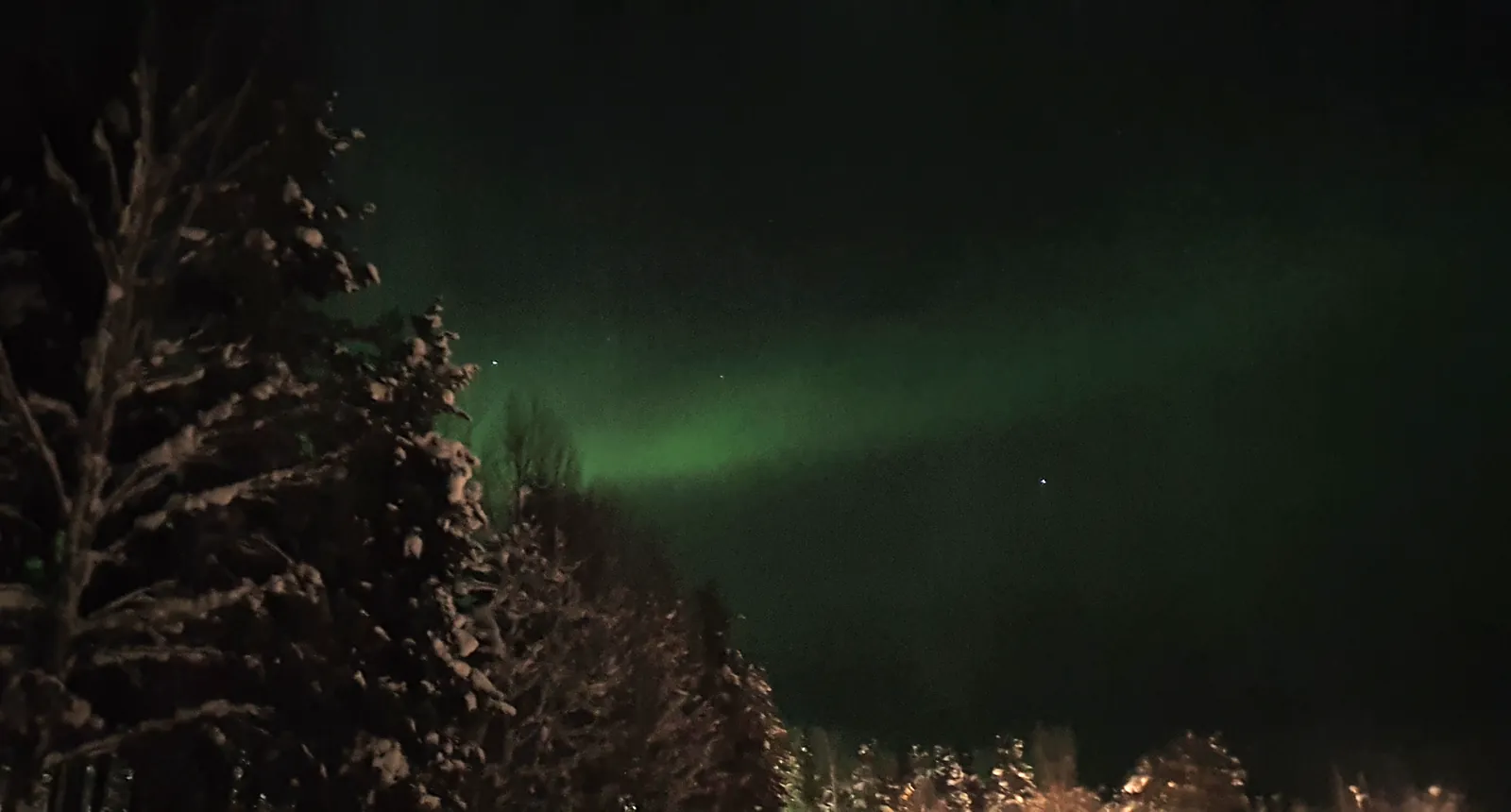
Where to see the northern lights in Sweden
The aurora oval lies over the far north. The further north you go, the more nights with northern lights you get. These places are on our winter route:
- Abisko, at Lake Torneträsk: probably the best place in Sweden. The mountains around the lake often keep the clouds away, so the sky is clear here when it is cloudy elsewhere.
- Kiruna and Jukkasjärvi: the biggest town in the north, home of the Icehotel. Drive 10–15 minutes out of town and the sky is dark.
- Jokkmokk and Porjus, right on the Arctic Circle: wide frozen lakes and almost no light pollution.
- Gällivare and Dundret: from the top of the mountain you look over endless forest to the north.
- Arvidsjaur and the Inland Road: forest, frozen lakes and husky farms – northern lights are common from here northwards.
- Alta and Kautokeino in Norway: Alta calls itself the town of the northern lights, and the inland plateau around Kautokeino is often clear and very cold.
When is the best time?
You need two things: darkness and a clear sky. Up north the season runs from September to March. Between April and August the nights are too light.
| September – October | Lakes not frozen yet – the aurora reflects in the water. Milder nights, autumn colours, first snow. |
| November – January | Longest nights and the coldest weeks. In December the sun hardly rises in Kiruna. Very atmospheric, but little daylight for driving. |
| February – March | Our favourite for a road trip: deep snow, often stable cold weather and clear nights – and already 6 to 13 hours of daylight for driving and activities. |
- Most displays come between about 21:00 and 02:00. The aurora often comes in waves – if it fades, wait half an hour.
- A full moon does not stop the aurora, but faint lights are easier to see in a dark week.
- The sun reached the peak of its 11-year cycle around 2024. In the years after the peak there are fewer, but still strong solar storms – the coming winters are still a good time.
How to improve your chances
- Stay several nights in the north. Three or four nights between Abisko, Kiruna and Jokkmokk give you a very good chance.
- Watch the clouds, not only the aurora forecast. In Lapland even a low KP index of 2–3 is often enough – if the sky is clear.
- Useful apps: an aurora forecast app (for example My Aurora Forecast) and the weather and cloud map of SMHI, the Swedish weather service.
- Get away from lights: a frozen lake, a parking place by the forest road or a hill outside the village.
- Be patient and dress warmly: at −20 °C you stand still for a long time. Warm boots, a hat and a thermos with hot tea make all the difference.
Why your own 4×4 makes the difference
On a bus tour you go out for one evening and hope. With your own car you follow the clear sky.
- Clouds over Kiruna? Drive towards Abisko, where it is often clear. With a car you can move 50–100 km in the evening.
- No fixed times: you stay out as long as the sky is active – and drive back to your warm lodge or cabin.
- You stay where the aurora is: in a wilderness lodge, an aurora cabin with a glass roof or a cabin by a frozen lake – far from the lights of the town.
- During the day you combine it with husky tours, snowmobile trips, reindeer, ice fishing or a sauna by the lake.
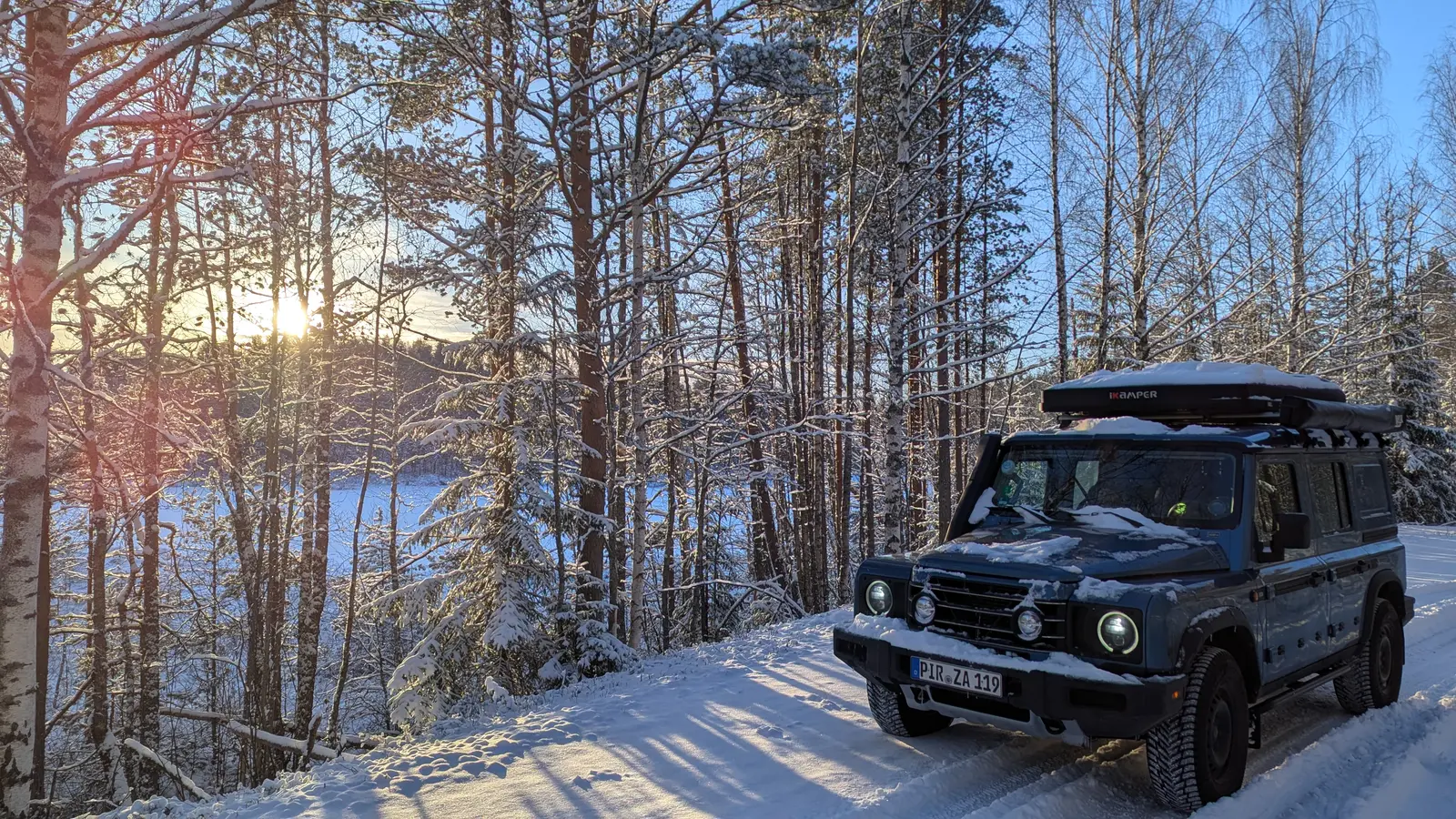
Photographing the northern lights
- A modern phone does it well in night mode. Lean it against something steady or use a small tripod.
- With a camera: tripod, manual focus on infinity, open aperture, 5–15 seconds exposure, ISO 800–3200.
- The cold empties batteries fast. Keep spare batteries and your phone in an inside pocket.
- A tree, the car or a frozen lake in the foreground makes the picture.
Questions we often hear
- Can you see the northern lights in Dalarna or Stockholm? Sometimes, during strong solar storms – in May 2024 the aurora was visible over all of Sweden. But in normal nights you have to go north.
- Is it guaranteed? No – nobody can promise the aurora. With several nights in Lapland in the dark season the chances are very good.
- How cold is it? Around Kiruna usually −10 to −20 °C in winter nights, sometimes −30 °C. Warm boots, a hat and good layers are a must – our cars have a diesel heater, so you always come back to a warm car.
- Do I need a guided aurora tour? No. With your own car you simply drive to a dark place. A guided tour is still nice for the stories and the hot drinks around the fire.
Photo at the top: Pavel.shyshkouski, Wikimedia Commons, CC BY-SA 4.0. More: Swedish Lapland – northern lights · SMHI weather
Plan your aurora road trip
The Winter Epic planner builds your route from Dalarna to Lapland – with northern lights tours, places to sleep and the days to drive.